

Many, including me, have warned about the dangers of broad (hasty, in the logical fallacy terminology) generalizations, some of us so much that we fear we’re repeating ourselves (or was that dinner … hard to tell sometimes when you’re having a summer IBS flare).
Nuance and specificity are lost when we generalize, and entire arguments become specious (like forgetting a republic is a type of democracy, and what James Madison argued against in The Federalist Papers was specifically direct or pure democracy, not democracy in general; unfortunately, his wording may have contributed to those people [generally the same people who refuse to believe that language evolves] who forget that there is more than one type of democracy).
We run into the same problem with the current rage over socialism/communism, which is more a misunderstanding or mislabeling of terms. While it would take more than a single column to tackle the differences, I’m willing to at least scratch the surface.
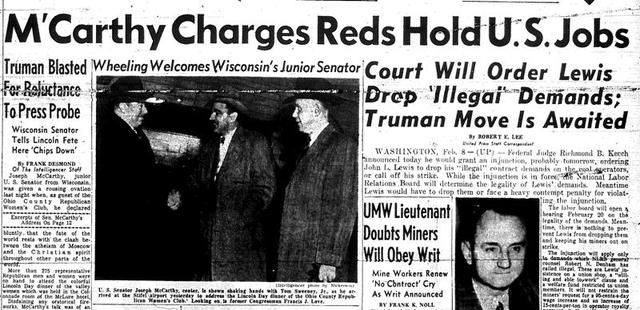
Those of us with more than a high school education (especially if we minored or majored in political science) can see the current scare campaigns surrounding democratic socialism for what they are: McCarthyism for a new century. What most (some are further out there) of those advocating for democratic socialism tout is not the central planning of communism, but something closer to that of several European nations (which is more accurately known as social democracy), with universal health care, free markets, and better protections for all. Yes, there are high taxes, but those taxes pay for what we in America are going into massive debt for, so it balances out because the focus is on the well-being of the people rather than advancing a huge wealth gap to stay in power.
There’s a reason Scandinavians/Nordic countries are happier than we are (actually there are several, and not necessarily what you think).

I was in college when the Berlin Wall fell, and was lucky enough a year or so later to take an honors seminar called Communism in Crisis (lord, the conniptions that would cause today, although the professor had fled as a Ukrainian child with his family from the horrors of that ideology) on the fall of communism, in which we analyzed why so many communist countries failed (some are still limping along, but no one can truly call places like Cuba or North Korea successes).
But the U.S. is a capitalist country, you say? Not so fast, there, buddy. There are no purely capitalist countries any more than there are purely socialist nations because pure systems don’t really work (that includes democracy, which really works only in very small populations in its pure form). The U.S. has a mixed system, with socialist as well as capitalist elements (for one thing, the government controls part of the economy, which is [gasp] a wee bit socialist, and that’s before you get to social programs).
God bless the mutts and their health, which tends to be better than that of the “pure.”
Red China isn’t even all that red anymore (though the authoritarian/communist cruelty is still a huge feature, as well as state planning), and its economic system is mixed as well, with elements of capitalism and private enterprise.

Broad generalizations serve more often to confuse issues, and that’s how it is with communism, socialism, and democratic socialism (we won’t get into the mistaken belief that Nazis (extreme far right on the political spectrum) were socialists (far left on the spectrum) because it was in the name of the party; it’s not the first time and won’t be the last that someone intentionally described something with the wrong word, such as the Democratic People’s Republic of Korea).
Communism and socialism are related, but not quite the same. Karl Marx considered socialism a transitional economic and social system, with communism as the end goal. As Marx and Friedrich Engels used “socialism” and “communism” interchangeably, and others did so as well till 1917 and the Bolshevik Revolution in Russia, it’s led to a lot of confusion. Where they most seem to differ is on how goals are accomplished, and in the realm of private property (none in communism, but yes in socialism).
Marx advocated violent revolution, and followers like Vladimir Lenin and Joseph Stalin certainly endorsed that as well as one-party rule and government control over the means of production under communism. (Ahem … should we say anything about the U.S. government stake in several companies?)

On a small scale, socialism of a sort works and has been around far longer than Marxism (he wasn’t even the first socialist once the philosophy had a name, and he looked down on many of them); think of how small and distant villages managed to survive long ago: by focusing on the needs of the many. Writ large in a more populous area, greed and the lust for power tend to enter the picture and skew the whole thing (which happens with capitalism as well), and wobbles eventually doom the system into authoritarianism.
EBSCO Information Services notes of democratic socialism (or social democracy): “Unlike communism, which advocates for revolutionary change to dismantle capitalism, social democrats believe in the possibility of gradually reforming society to create a balance between regulated capitalism and social welfare programs. The movement, rooted in the ideas of early thinkers like Ferdinand Lassalle and influenced by Karl Marx, proposes that a true democracy can co-exist with a system that prioritizes workers’ interests through cooperation rather than competition.”
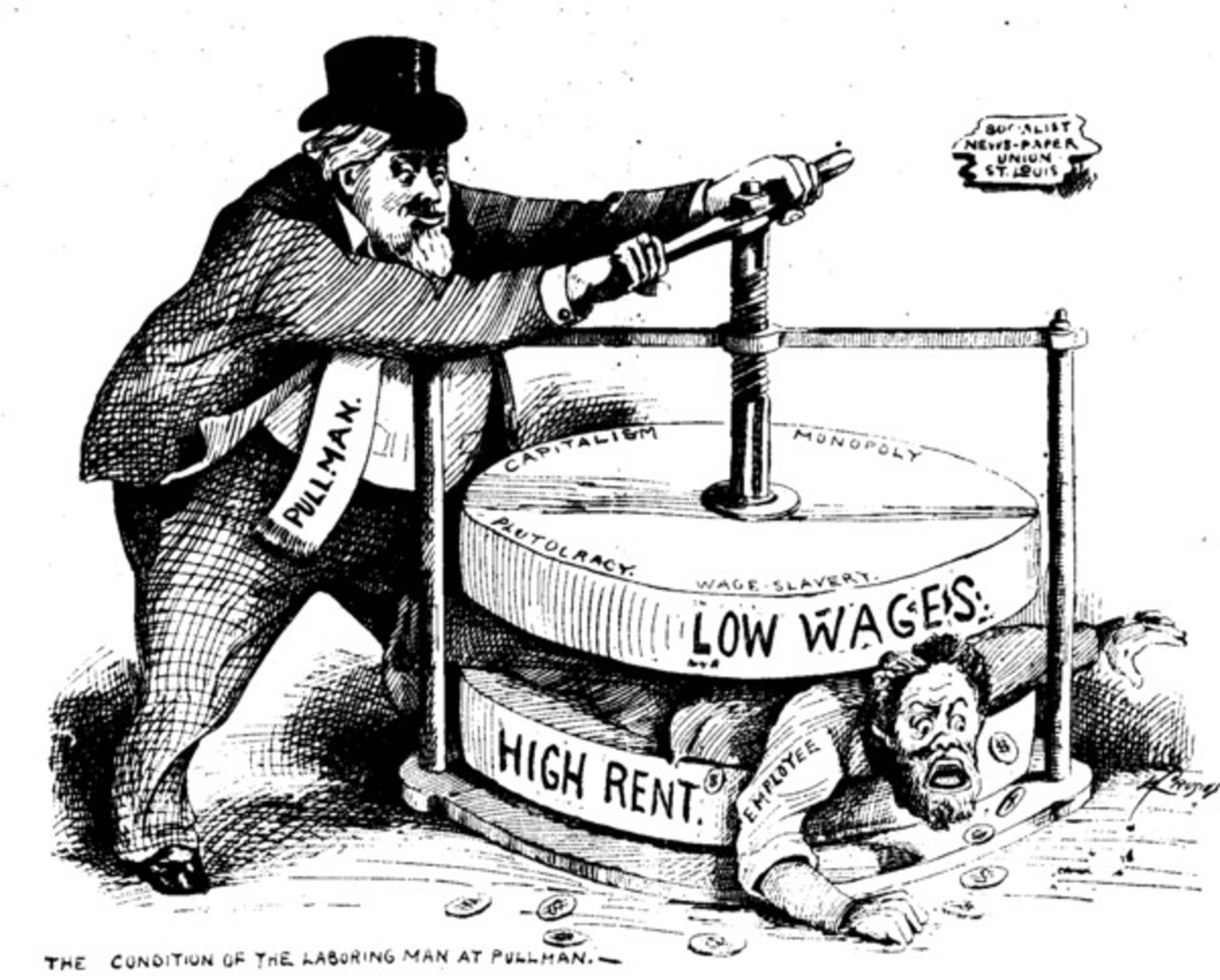
Marx wasn’t wrong about capitalism being an exploitation of labor; compare the wages of CEOs and the workers who actually produce goods and services for one example of that. However, capitalism isn’t quite the evil he believed, though, like socialism, if carried too far, it does more harm than good.
Which is why the middle path is what most advocate, not a pure system. But the middle path involves give and take, discussion and compromise, and what good are those things in a country like ours?
Can’t keep people divided into hyperpartisan camps without scare campaigns that funnel lots of money to people who thrive on division, now can we?
When you start thinking about it, the U.S. is already a social democracy of a sort, just not as successful as those in Europe.
It doesn’t help matters that democratic socialism and social democracy are used interchangeably when they’re not really the same. (Key point: Democratic socialism decries capitalism, while social democracy doesn’t.) Of course, for scare campaigns, that’s all the better.
Who needs nuance and specificity when you can just fearmonger and shut down honest debate?



I worry a lot about some Democrats skewing far left into the “Democratic Socialist” category, a label often used by their attackers. I fear it is dividing the party (“divide and conquer”) just when strength and unity is most needed. I couldn’t define any of those government types without first reading some reliably sourced definitions. But I would read, unlike too many voters in the US. (For the record, I’m an Unaffiliated voter.)
LikeLiked by 2 people
Same, unaffiliated. I just can’t follow party lines. It should be the best person for the elected position, not party (and it makes it very hard for me to take seriously the people who push “merit” in jobs (when they really mean white men, most of the time) who also place party above the person. Sigh.
I’m all for a mutt government.
LikeLiked by 1 person
If “They” only selected “white men” for jobs, we would not have enough nurses to take care of our patients. There are more men going to nursing school now but the majority of nurses are still women (said the man who has worked in a hospital for many years).
LikeLike
Anymore I just want people in Congress who will do their jobs and properly represent the constituents who elected them (aka “we the people”)and stop selling their souls to a demented, self-serving wannabe king.
LikeLiked by 1 person
Many years ago I remember reading a suggestion that maybe we should use the same system which we use to select people to serve on juries in a court of law to select people to serve in Congress as either a Senator or a Representative. Yes you could get an exemption or a waiver if you were either unable to serve or did not think you handle the demands and the stress of such a difficult job.
LikeLike
A “mutt government”? Yes we need to put Earl and Mooch in charge of the United States.
LikeLike
Earl could be the President and Mooch could be the Vice President.
LikeLike
I’m thinking that the type of government doesn’t matter as much as does political dysfunction that permits runaway authoritarianism to start wars that drain all the blood and treasure that could otherwise be applied to the public good. Nevertheless, good descriptions of what might be useful in more peaceful times. Good job, Brenda.
LikeLiked by 2 people
“Runaway authoritarianism”? Unfortunately, there are too many people who seem to think and believe that our current President–otherwise known as “Daddy Donald”–knows what is best for us and we should all accept his authority automatically and do what he tells us to do. Like that television program about “Father Knows Best”. (I wish WordPress had a special sarcasm font)
LikeLike
Whew! That was some deep scratching of the surface. It was seminar quality for some. These doggone liberal arts degrees pay off in the long run. Mine, sociology and history. Thanks professor.
LikeLiked by 1 person
Well at least it is not a “Gray” scare.
LikeLike